
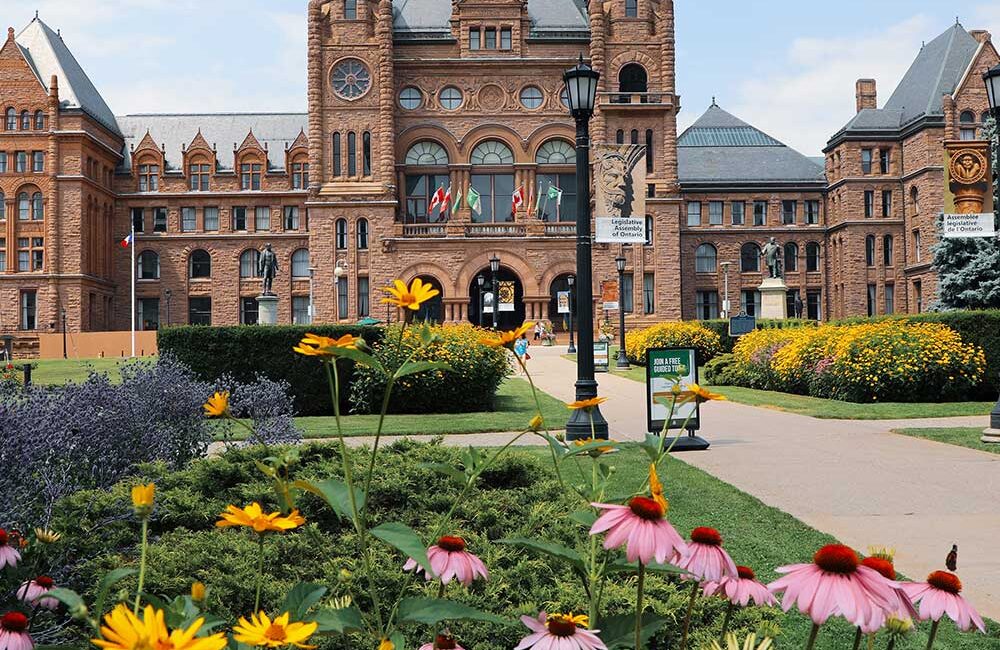
The Canadian Taxi Association submitted its recommendations to Ontario’s Budget Consultations on January 30th, 2026. To read or download the full CTA Budget submission, click on the link below the document posted at the bottom of this page.
*****
Media release
February 6, 2026
Ontario provides $3 billion in subsidies to American corporations: CTA
Ontario taxpayers provide an estimated $3 billion in hidden subsidies to U.S. ride hail corporations like Uber and Lyft, a recent Budget submission details.
“All of the costs of gridlock, policing, and provision of accessible services are being downloaded to taxpayers, while profits leak out of Ontario to global investors like Blackrock and Vanguard,” says Marc André Way, president of the Canadian Taxi Association (CTA).
“Our transit systems are losing riders and revenues, which harms us over the longer term. The open-entry approach Ontario has used in the ground transportation sector has provided favoured market status to American rideshare corporations. This is not innovation, but a hidden subsidy.”
On January 30, the CTA submitted a proposal to Ontario’s Budget consultation highlighting the fact that Ontario is subsidizing American corporations at an estimated cost of $3 billion annually. It details some of the costs the province is bearing:
- GRIDLOCK AND PRODUCTIVITY LOSS: approximately $1–$3B/year in additional gridlock burden and spillover costs;
- VALUE LEAKAGE FROM ONTARIO TO THE U.S: approximately $0.5–$1.7B/year in economic rents and profits extracted out of Ontario, enabled by regulatory asymmetry and non-compliance incentives. Some of these asymmetries include weaker identity verification; training; accountability; and enforcement requirements than those imposed on local Ontario taxi operators, together with predatory pricing, wage theft, downward pressure on labour and consumer protections.
- PUBLIC RISK TRANSFER: multi-billion downstream costs linked to enforcement drift, fraud/unlicensed operations, safety incidents including sexual assaults; and transit erosion. The City of Ottawa alone was found liable in a $213 million judgement in 2024.
When the Ford government announced it would conduct a review of Ontario’s ground transportation framework as part of the Fall Economic Statement, the CTA worked with a coalition including rideshare drivers; police; environmental and accessibility groups to offer a new vision for improved ground transportation. These ideas were sent to Premier Ford in a letter on January 19th.
Priority areas for discussion include:
- compliance with the Accessibility for Ontarians with Disabilities’ Act;
- business being lost to gridlock;
- consumer protection;
- passenger safety;
- drivers’ earnings; and
- emissions.
“It has been a decade since laws were re-written to satisfy these American corporations. We welcome Ontario’s review and the chance to update and re-design a ground transportation system which benefits everyone: accessible users, hard-working drivers, and citizens concerned about safety and protecting our environment.”
-30-
Media Release – February 6, 2026
Ontario needs updated ground transportation info systems: CTA
Ontario needs a system to manage licensing and tracking the thousands of professional drivers providing ground transportation services, industry members have told Doug Ford.
“The time has come for one centralized, comprehensive provincial information management system tracking both commercial drivers and their registered vehicles,” says Marc André Way, president of the Canadian Taxi Association (CTA).
“Too many municipal governments are failing at crucially important elements like delivery of accessible services; management of congestion causing gridlock; and the crime prevention and consumer safety aspects of ground transportation. No town or city in Ontario is equipped to deal with the surveillance pricing or algorithmic driver pay systems which have been introduced by American corporations; these sophisticated new systems require provincial oversight.”
When the Ford government announced it would conduct a review of Ontario’s ground transportation framework as part of the Fall Economic Statement on November 6th, the The CTA worked with a coalition to offer a new vision for improved ground transportation, including: ride hail drivers: police; environmental groups; and accessibility advocates. These ideas were sent to Premier Ford in a letter on January 19th.
Priority areas for discussion include:
- compliance with the Accessibility for Ontarians with Disabilities’ Act;
- business being lost to gridlock;
- consumer protection;
- passenger safety;
- drivers’ earnings; and
- emissions.
“With the explosion in the number of vehicles for hire (VFH) since ride hail services arrived in 2014, municipalities have found the task is too much for them to handle, and so many towns are simply walking away from the task,” Way says, pointing to a decision by Oakville Town Council on January 26 not to require ride hail drivers like Uber and Lyft to file their police background checks with Oakville.
On January 30, the CTA submitted a proposal to Ontario’s Budget consultation highlighting the fact that Ontario is subsidizing American corporations at an estimated cost of $3 billion annually by shifting real costs like insurance and enforcement onto public systems.
“Unsurprisingly, Ontario has learned that consumers appreciate fast, inexpensive services. However, most people are unaware that now taxpayers and drivers are subsidizing these cheaper services, while corporate investors like Blackrock and Vanguard siphon money out of Ontario,” Way points out.
“Our transit systems are losing riders and revenues, which harms us on the longer term. On-demand Accessible services have been devastated, and are essentially no longer available in cities like Toronto. Gridlock, congestion and emissions have exploded. These realities are proving a high price to pay, given that no one realized in 2016 that we were agreeing to them.
“It has been a decade since laws were re-written to satisfy these American corporations. We welcome Ontario’s review and the chance to update and re-design a ground transportation system which benefits everyone: accessible users, hard-working drivers, and citizens concerned about safety and protecting our environment.”